About Me

My photo
Atlanta, GA, United States
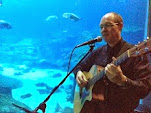
When I suffered a lip injury that ended my career as a classical trombonist, I thought my life as a musician was finished, but I fell in love with music all over again when Santa gave me a guitar for Christmas in 2003. Even as I was struggling with my first chords, I was planning a new performance career. As a trombonist, I performed with the Heritage of America Band at Langley Air Force Base, the Ohio Light Opera, and in pick-up bands for touring acts that included Rosemary Clooney, George Burns, and the Manhattan Transfer. Reborn as a jazz guitarist, I sing and play my own solo arrangements of jazz classics, am half of the Godfrey and Guy duo, and hold the guitar chair in the Sentimental Journey Orchestra. I have been a freelance music copyist since 1995, served as Director of Music at Northwest Unitarian Universalist Congregation from 2011 to 2017, and currently serve as Contemporary Band Director at the same congregation.
Showing posts with label Joe Pass. Show all posts

Friday, October 25, 2013

Lesson #15

This is my usual recap following a jazz guitar lesson with Dave Frackenpohl of GSU.

We started off sight-reading from some books that Hal Leonard had sent to Dave. I was interested in perusing the Hal Leonard Jazz Guitar method, which looks like a very useful book for a couple students of mine.

After that little warm-up, we dove right into Blues for Alice. I played the melody in two different registers, played the piano solo I had transcribed, and then improvised. No problems here. Then we moved on to the Joe Pass solo from his recording of 'Tis Autumn with Ella Fitzgerald. I got through it okay, which is the best result I could have expected. My assignment was to finish the transcription and then start learning it. At this point, I have the solo memorized. It's just a matter of woodshedding until it's under my fingers. We followed this with an arpeggio exercise over a harmonic minor scale. No problems. Then we worked on There Will Never Be Another You, starting with an arpeggio exercise that I had created for over the chord changes and then improvising. Again, this went well, and we ended the lesson with a page from the Blues in All Keys study from Galbraith's Guitar Comping book.

The new assignment.

  • Learn Four. I played this tune a long time ago, but it's time to get it going again. It's one of those bebop standards that you just have to know…plus it's fun. I'll be refreshing myself on the melody and changes this week. I predict that, at the next lesson, Dave will tell me transcribe a solo from a recording of Four. Dave is beginning to consistently assign bebop tunes. These are great for my technique.
  • More Joe Pass! I had started to transcribe Joe's ending in his recording with Ella. Part of my Joe Pass assignment is to finish that. Then I'm supposed to pick out a medium tempo Joe and Ella song, begin a new solo transcription, and pick out devices that Joe uses when he's comping for Ella. I've selected You Took Advantage of Me for this part of the assignment.
  • Arpeggio Exercise over Melodic Minor. I've worked up arpeggio exercises for major and harmonic minor, in which I outline 7th chords, ascending on the 1 chord, descending on 2, etc. This is the same exercise using the melodic minor scale. (For non-jazz players…In jazz theory, the melodic minor has the same raised 6th and 7th both ascending and descending. In classical theory, the melodic minor reverts to natural minor descending.)
  • Old Devil Moon. When asked which jazz standard I'd like to work on next, I asked for Old Devil Moon. I like this song, but it's awkward, and I'd like to play it better.
  • Galbraith's Guitar Comping. I'll be working on the next page of the Blues in All Keys study. I just finished the page that covers G-flat and B, which aren't exactly the most common blues keys! Next up are the keys of E and A – much more guitar friendly.
As usual, Dave has given me a challenging assignment. I discovered a while ago that jazz guitar lessons are quite different from the classical trombone lessons of my younger days. In classical trombone lessons, there were few long term projects except for solo and recital material. I was assigned a set of etudes, I learned them, and then I was assigned yet another set of etudes. The "long term" assignment was really to apply the fundamentals of good tone and articulation to each new set of exercises.

With my jazz guitar studies, the individual assignments are often long term. I'll work on the same song or transcription for 2, 3, or even 4 lessons in a row. With lessons spaced every other week, that means that I will sometimes be working on the same song for two months. Learning to play jazz and improvise is such an internal process that it often takes a long time for new concepts to settle in and become a natural part of your playing. Often, learning to play a particular song or transcription is almost a byproduct. The real payoff is internalizing new ideas that you can apply to everything else you play.

Friday, May 17, 2013

What a Workout!

Joe Pass
I've been transcribing a Joe Pass solo for an upcoming lesson. (I'm Beginning to See the Light, from the Sophisticated Lady album with Ella Fitzgerald) What a workout! I used to think I had a good ear! As a freshman at the University of Illinois, I tested out of the first two semesters of ear training classes. Even if I can't always play them right away, I can transcribe single line solos pretty well, and I'm a solid sight-singer. Joe Pass solos are a different beast. Joe Pass was a master of playing unaccompanied guitar solos, which is an aspiration of mine. He played a lot of block chords with close harmonies, which are much more difficult to pick out than single line melodies.

I just spent over an hour transcribing eight measures of a Joe Pass solo. I was able to find a few chord voicings right away, but I had to puzzle out most of them. If I couldn't figure out a voicing right away, I would listen for the highest and lowest note of each chord (the two easiest notes to hear). This gave me a reference point, and then I could begin to fill in the chord from there. I would listen for a minor, major, or dominant sound, and then I would experiment with different voicings of the same chord until I found a match.

A quote from a Joe Pass DVD has helped immensely. In the introduction (I don't remember which DVD), he said, "What I play is easy." He wasn't being facetious. Whenever I watch a video of Joe Pass performing, he almost always grabs easy chord forms. I used the "this is easy" concept as a guideline to find the simplest way to grab each chord.

As I transcribe this solo, I really am struck by the simplicity of what Joe Pass played. He took basic guitar voicings and put them together in brilliant ways. I can already tell that I'll be reaping tremendous benefits from transcribing this and other Joe Pass solos. As I puzzle out each new voicing, I am either picking up new chord voicings or learning new ways to use voicings I already know. Eventually, this will become part of my own vocabulary as I explore unaccompanied improvisation.

Monday, February 4, 2013

"Solo" Soloing

Joe Pass
Joe Pass was the master of self-contained jazz guitar improvisation. This is something that I've been working on, and I've gradually improved over time. Like any other musical skill, it's a work in progress that will keep me busy for the rest of my life.

Over the next several months, I'll be making a special effort to work on my solo improvisation as part of the Godfrey and Guy duo. When I improvise for myself, I have the flexibility to pick a key for that lays well for chord/melody arrangements. As part of the duo, where Lori Guy does most of the singing, I no longer have that luxury. As with most female vocalists, the key for any given song is "wrong" for guitar chord/melody arrangements. It's either too high or too low for a solo arrangement.

For now, I've been using a looper. I'll record while I comp for Lori during the first chorus, and then I'll loop those chords for guitar improvisation. This is great practice for my single line improvisation, and even better than that, it's great practice for training myself to keep time. When you start the loop over again, you can tell immediately if you've changed tempo. My time isn't perfect, but it sure has gotten better since using a looper to record entire choruses.

The bad thing about a looper is that there is very little flexibility. My comping has to be very basic. There's nothing wrong with simple. Simple usually sounds best, but if Lori does something creative in her vocals, I can't answer with an appropriate musical response, because it'll sound weird when I loop the chords back for solos.

I've nearly weaned myself from looping when playing solo gigs. Now, it's time to do the same with the Godfrey and Guy material. We have a lot of songs in the book, so I'm tackling a few at a time. The first three on the list are It's Only a Paper Moon, All of Me, and Bésame Mucho – all in non-standard keys. I like to blend improvised sections with chord/melody sections. I started working through these three songs earlier this evening. There are some bugs to work out, but I was pleasantly surprised with some early success.

I'm looking forward to the day when I'm comfortable leaving the looper at home for Godfrey and Guy gigs. It'll make us more flexible, and working through these songs will make me a stronger improviser. As an added bonus, it'll be one less thing to carry to a gig!

Friday, January 6, 2012

Learn Tunes

Joe Pass is one of my all-time favorite jazz guitarists. He was best known as a solo guitarist. His "Virtuoso" recordings are jaw dropping. My favorite recordings of Joe Pass are his duos with Ella Fitzgerald. I love the mix of solo guitar and understated, "just right" comping for Ella's singing.

Joe Pass' most famous advice for learning to be a good jazz guitarist was to "learn tunes." Many guitarists search for "secrets" of the master players. The big secret is that there is no secret. It all comes down to practice. The more you practice, the more you develop whatever talent you were born with.

While it's necessary to put in the hours, the quality of those hours is also important. This is where Joe's "learn tunes" advice comes into play. You can play technical exercises and develop fast fingers, but nobody wants to hear you play a bunch of scales. When you spend a lot of time learning tunes, you not only develop your technique, but you learn how to use your technique to serve the music and not the other way around. Joe Pass had astounding technique, but at the same time, his improvisation was approachable and melodic.

Last year, I spent too much time working on technical exercises when I should have been learning tunes. I was approaching jazz in guitar in the way I approached classical trombone. Most classical trombonists are ensemble players. They spend most of their time sitting with a handful of other trombonists in the back of a large orchestra or concert band, rarely playing solos. Back then, my job was to be able to sight-read anything you put in front of me. I spent a good portion of my practice time working on very difficult music that you would never hear outside the practice room. My philosophy was that because the exercises I was playing were so difficult, I would rarely encounter a trombone part that I couldn't read perfectly on sight.

It's different with jazz guitar. First of all, I'm a soloist. Even when I'm sitting in as a back-up player, I usually get the nod to play a solo here and there. Second, as a jazz player, I have to improvise. When you learn a lot of tunes, you gradually learn the language of jazz. If you spend a lot of time playing exercises, your improvisation will probably come out sounding like an exercise. If you spend a lot of time playing melodies, your improvisation will come out sounding more melodic.

I'm still practicing my core warm-up exercises of scales, arpeggios, fingerpicking exercises, and licks. I've scaled it back, though, sticking to just the basic exercises so that I have more time to work on tunes and increase my repertoire. It's just the first week of January, and I've already had time to write a guitar arrangement and learn a couple new vocals. I'm discovering that there's another good reason to spend less time on exercises and more time playing tunes: It's more fun!

Friday, July 29, 2011

Making It Up

Last night I played a solo guitar gig for a wine and cheese crowd in Midtown Atlanta. I've been concentrating pretty heavily on Tea for Two, so it's been a while since I've played completely solo. I really enjoyed the job. It was in a beautiful room, the acoustics worked well for solo guitar, the guests were pleasant, and my client was easy to work with.

There's no way my client or the guests could have known, but this was a breakthrough experience for me. This was the first time I've improvised unaccompanied in public. I improvise quite a bit in group situations, but pure solo improv on the guitar is a challenge. I've been taking stabs at unaccompanied improv at home for a couple months, but I've never been brave enough to try it in public. When I booked this gig a few weeks ago, I decided to challenge myself and improvise throughout the evening.

There are two main reasons I've been working on unaccompanied improvisation. One is practical, and the other is artistic.

For practical purposes, improvisation enables you to stretch out the time. The solo guitar gigs that I play are musical wallpaper gigs. I'm there to help create a pleasant atmosphere. Some guests will listen for a while, but I'm not the center of attention. These gigs can last two or more hours. That's a lot of time to play solo, and it's quite a workout, too. I've arranged around 50 jazz standards for solo guitar, which is enough to get through a two hour gig. When I improvise, though, I can really stretch it out! I played for two solid hours last night, and I didn't even make it through half my repertoire.

An even more important reason to practice unaccompanied improv is that it makes me a better musician, and it helps me keep myself entertained at a wallpaper music gig. If I can improvise unaccompanied, I become a better solo musician. On top of that, it makes me a stronger improviser when I'm playing with other musicians to back me up. Playing my arrangements note for note can feel pretty stale after a while. If I played a few solo gigs each week (which is a goal of mine), I would get bored with these arrangements pretty quickly, but not if I sprinkle in some improvisation to keep it fresh.

I was pleasantly surprised at how well I improvised. I'm not exactly in the same league as Joe Pass or Martin Taylor, but I made a good start last night, and I'll be sure to include unaccompanied improvisation more and more often.

Sunday, February 13, 2011

LSD

A highlight of the week is my LSD run, and no, it's not what you think. To a runner, LSD is "Long, Slow Distance." This is a weekly run that is at least 1.5 times as long as your average run. I'm currently running 4-6 miles on a given day during the week, but my long run is at least 10 miles. For some, this may seem masochistic. For others, my 10+ miles is just an average workout.

LSD is a must for a distance runner. The way to build endurance is to, well, endure. It's an incredibly challenging workout. You don't want to go for an LSD run more than once a week unless you're trying to run your body into the ground. There are probably some ultra-runners out there who would disagree, but one LSD run per week is plenty for us mortals.

The LSD run also teaches you mental toughness and patience. You must maintain a slower pace on an LSD run, or you simply won't last…or maybe you will last, but you'll wish you hadn't! At the beginning of an LSD run, I curb my enthusiasm, running purposefully and slowly. Yesterday I ran 11 miles. It felt like I was moving at a snail's pace, but once I hit 5 miles and realized I had 6 more to go, I was congratulating myself for maintaining a reasonable pace. Running an 11:30 mile may seem very slow. Well, it is very slow, but believe me, if you run at that pace for 11 miles, you'll feel it!

About 15 years ago, I was a pretty speedy runner, training mostly for fast 5K and 10K races. Even though I'm not nearly as fast these days, I'm able to run longer distances because I've learned the value of slowing down. Back then, I used a stopwatch so that I could push myself to run faster and faster. Today, I wear a GPS watch that keeps track of my pace. Instead of using it to push the tempo, I actually use it to slow down on my LSD run. If I find that I'm running faster than a certain pace, even if I feel strong, I'll slow down until I reach the pace that will allow me to go the distance. As I continue running, I'll naturally become faster as I grow stronger, but this year is all about endurance. One of my goals is to be able to run 20 miles by the end of the year, and I've already worked out a training plan.

The Long, Slow Distance mindset is part of my musical life, too. As a guitarist, I want to be able to play like Joe Pass, Frank Vignola, or Martin Taylor. The reality is that I sound good for someone who's only been playing seven years, but I'm nowhere near their league. All I can do is maintain my slow, steady pace and go the distance. Each day, I run through scales and patterns, practice sight-reading, work on improvisation, practice music for upcoming performances, review my solo arrangements work on new arrangements, and so forth. Every practice session is like logging another mile in my LSD guitar run. You never know, someday I might wake up and realize I can run with the big dogs. Until then, it's one step at a time.

Monday, August 30, 2010

Learn Tunes


Joe Pass was one of the best jazz guitarists, period, and he's one of my main musical inspirations. When asked what a developing guitarist should practice, he responded with "learn tunes." In other words, all you need to know is contained in the jazz repertoire. Now I suspect that Joe spent plenty of time practicing licks and scales, but I think he meant that you should spent most of your time learning the repertoire, because the licks and scales are all there in the music.

Lately I've gotten away from learning tunes. I've been spending a lot of time working on technique, especially scales, arpeggios, scale patterns, licks, and pick speed. There's nothing wrong with this. It's a necessity at my stage of development. While I'm not setting the world on fire, my technique has definitely improved over the past several months, but I've drifted away from learning tunes. It's time for a course correction.

When I was a classical trombonist, I played a lot of etudes. An etude is a piece of music written for study, not necessarily for performance. An etude is meant to help the player focus on one or two aspects of playing. For developing legato technique on trombone, you absolutely have to work through the Rochut Melodious Etudes for Trombone. And then there are the Blazhevich Clef Studies that were written specifically to help (or force) the trombone player to be comfortable reading bass, tenor, and alto clefs.

From now on, jazz melodies will be my etudes. Today, I started working on Joy Spring. I've been in love with this melody since the first time I heard it. It's tricky. My single line technique will improve as I get this melody under my fingers. My improvisation will improve as I learn to navigate the chord changes. I'm not going to stop playing scales, patterns, and licks, but I'm going to renew my focus on learning tunes.

In case you haven't heard Joe Pass, click here for a YouTube clip of Joe Pass performing Joe's Blues.